
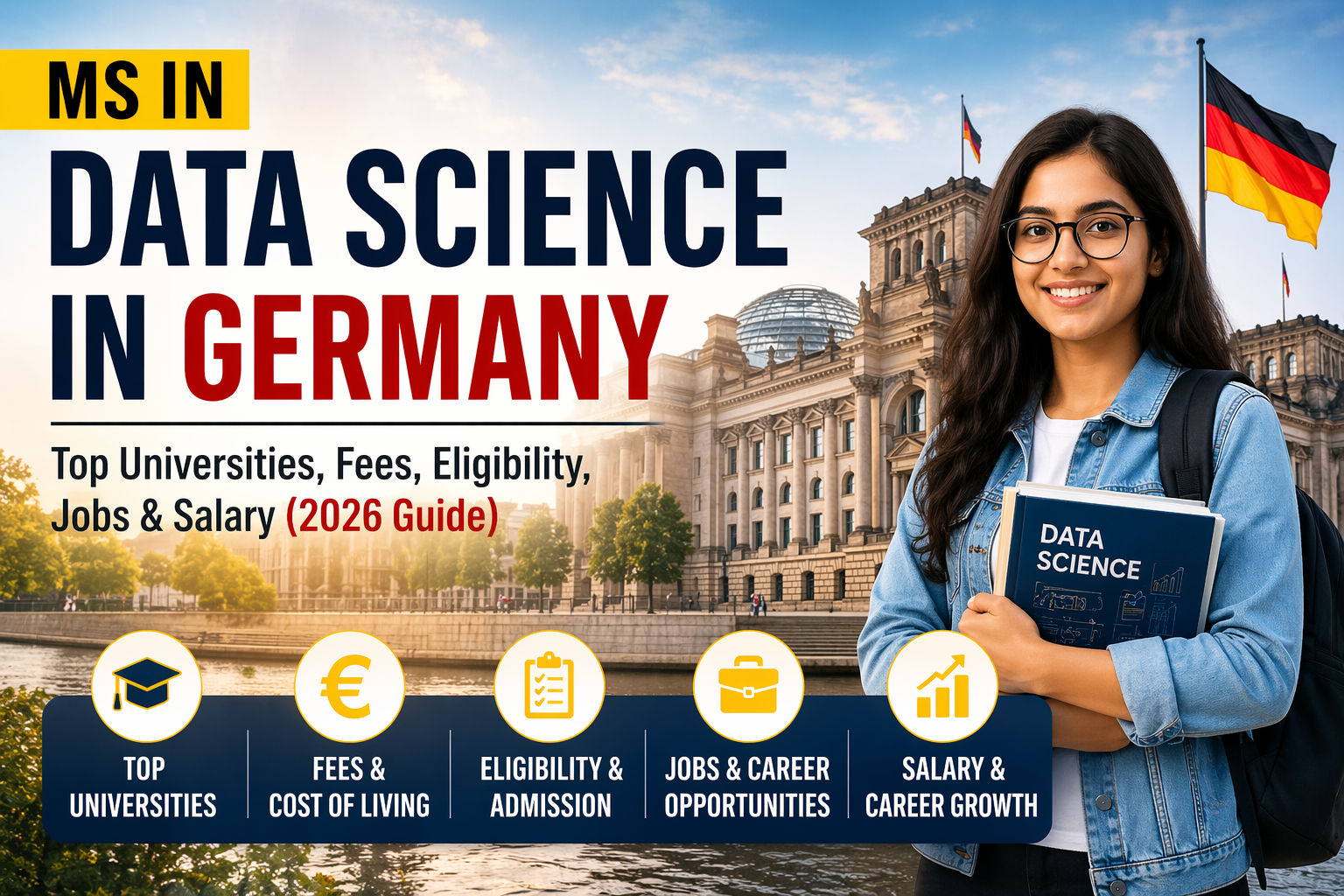
If you’re planning to build a career in tech, analytics, or artificial intelligence, pursuing an MS in Data Science in Germany is one of the smartest decisions you can make right now.
Germany is not just known for engineering and automobiles—it’s also becoming a major hub for data science, AI, and tech innovation. And the best part? You can study here at a low cost while gaining access to a strong job market.
Let’s break everything down in a simple, honest, and practical way.
Why Choose MS in Data Science in Germany?
Choosing a country for your master’s isn’t just about education—it’s about outcomes.
An MS in Data Science in Germany offers a powerful combination of affordability, global exposure, and job opportunities.
Key Benefits:
- Low or No Tuition Fees at public universities
- High Demand for Data Professionals
- Industry-Focused Curriculum
- 18-Month Post-Study Work Visa
- Opportunities Across Europe
Germany focuses heavily on practical learning, which means you won’t just study theory—you’ll work on real-world projects.
Top Universities for MS in Data Science in Germany
When applying for an MS in Data Science in Germany, don’t just look for course titles. Many universities offer programs under different names like AI, Data Analytics, or Computational Science.
Here are some top universities:
- Technical University of Munich (TUM)
- Ludwig Maximilian University of Munich (LMU)
- RWTH Aachen University
- Humboldt University of Berlin
- University of Mannheim
- University of Stuttgart
Universities, Fees & Program Overview
| University | Program | Tuition Fees | Language |
|---|---|---|---|
| TUM | Data Engineering & Analytics | €0–€1500/semester | English |
| LMU Munich | Data Science | €0–€1500/semester | English |
| RWTH Aachen | Data Science | €0–€1500/semester | English |
| University of Mannheim | Data Science | €1500/semester | English |
| University of Stuttgart | Data Science | €1500/semester | English |
💡 Note: Fees may vary slightly depending on the program and semester contribution.
Cost of Studying in Germany
One of the biggest advantages of pursuing an MS in Data Science in Germany is affordability.
Tuition Fees
- Public Universities: €0 – €1,500 per semester
- Private Universities: €10,000 – €30,000 per year
Living Expenses
- €850 – €1,200 per month
This includes:
- Accommodation
- Food
- Health insurance
- Transportation
📍 Cities like Munich are expensive, while Leipzig and Aachen are more budget-friendly.
Eligibility Criteria for MS in Data Science in Germany
Getting into a German university is structured but manageable.
Academic Requirements
- Bachelor’s degree in:
- Computer Science
- Mathematics
- Statistics
- Engineering
- Strong foundation in programming and mathematics
Language Requirements
Most MS in Data Science in Germany programs are taught in English.
- IELTS: 6.5+
- TOEFL: 90+
For German-taught programs:
- TestDaF / DSH required
Required Documents
- Statement of Purpose (SOP)
- Letters of Recommendation (LORs)
- Updated CV/Resume
- Academic transcripts
- GRE (optional but helpful)
Application Process (Step-by-Step)
Applying for an MS in Data Science in Germany is straightforward if you follow the right steps:
- Shortlist universities
- Check eligibility criteria
- Prepare documents
- Apply via university portal or Uni-Assist
- Wait for admission results
Intake Periods:
- Winter Intake (Main): September/October
- Summer Intake: March/April
Jobs After MS in Data Science in Germany
This is one of the strongest reasons to choose Germany.
Graduates of an MS in Data Science in Germany are in high demand across multiple industries.
Popular Job Roles:
- Data Scientist
- Data Analyst
- Machine Learning Engineer
- AI Specialist
- Business Intelligence Analyst
Salary After MS in Data Science in Germany
Let’s talk numbers.
- Entry-level: €50,000 – €70,000/year
- Mid-level: €70,000 – €100,000/year
With experience, salaries can go much higher—especially in tech companies.
Career Scope in Germany
The future looks strong for data science professionals.
An MS in Data Science in Germany opens doors to:
- AI and Machine Learning careers
- Big Data Analytics
- Automation and Robotics industries
- Opportunities across the European Union
Germany is currently facing a shortage of skilled tech professionals, which works in your favor.
MS in Data Science in Germany: Career Growth & Future Demand
The demand for professionals with an MS in Data Science in Germany is expected to grow significantly in the coming years. Companies are increasingly relying on data-driven decisions, creating massive opportunities in analytics and AI.
Pursuing an MS in Data Science in Germany gives you hands-on experience through internships, research projects, and collaborations with top companies. This makes you highly employable not just in Germany, but globally.
Moreover, completing an MS in Data Science in Germany prepares you for future-ready roles in artificial intelligence, big data, and automation—fields that are only going to grow.
Challenges You Should Know
While Germany offers many advantages, there are a few challenges:
- Learning basic German can be necessary for jobs
- Bureaucracy can take time
- Finding accommodation in big cities can be difficult
Why You Can Trust This Guide
This guide is based on official university data, real student insights, and current job market trends.
- Admission requirements are aligned with resources like the DAAD
- Cost and fee estimates are based on updated student and government data
- Career insights reflect real hiring demand in Germany’s tech industry
We focus on practical, honest, and actionable information—so you can make confident decisions about your future.
Final Thoughts
An MS in Data Science in Germany is not just a degree—it’s a long-term investment in your career.
With low costs, high-quality education, and strong job opportunities, Germany offers one of the best returns on investment for international students.
If you plan smart, choose the right university, and build the right skills—you’ll be in a very strong position globally.
Leave a Reply